You have stretched it, rolled it and rested it, and the tissue still feels gritty and stuck the moment you load it again.

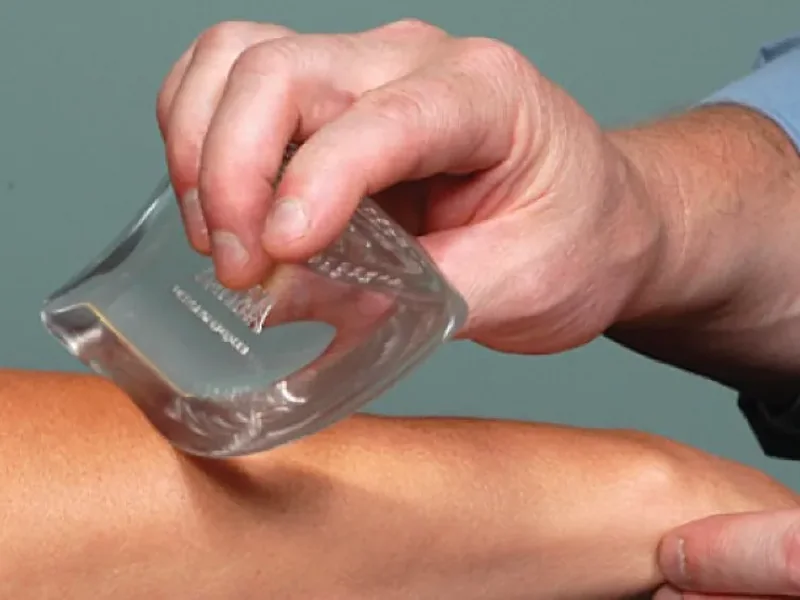
IASTM stands for instrument assisted soft tissue mobilization. It is a category of hands-on treatment rather than a single brand. Your therapist uses a contoured stainless steel or plastic tool to work through the skin into the fascia, tendon and muscle underneath, applying pressure that fingers cannot sustain and picking up feedback that fingers cannot feel. Tissue that healed badly, sat immobilized, or absorbed the same load for years stops sliding the way it should. It grabs. That is what the instrument finds. The tool amplifies the therapist's sense of where the restriction sits, then delivers a controlled mechanical stimulus to that exact spot. The goal is not to break anything down. The goal is to give the tissue a reason to remodel, and then to load it while it is doing so. IASTM is the umbrella term. Graston Technique and ASTYM are branded protocols that live inside it, each with its own instruments, training and treatment rules, and each has its own page on this site. At Fittees, Dr. Tochi Egbuzie chooses the approach from what your evaluation shows, not from what happens to be on the shelf. Some presentations want the targeted, aggressive character of Graston style work. Others respond better to the broader, more systemic ASTYM approach. Many do best with instrument work as one part of a session that also includes joint mobilization and loading. You do not need a doctor's note to start, because Texas is a direct access state.
Instrument work is a tool, never the whole plan. Scraping tissue that is irritable because it is underloaded will feel excellent for an afternoon and change nothing by Thursday. What makes IASTM hold is the movement that follows it. The range you gain in the first ten minutes gets used, loaded and rehearsed across the rest of your 45 to 60 minutes with your DPT. That is the difference between a treatment you enjoy and a problem you finish.
IASTM is for tissue that has stopped moving well, whatever the reason it stopped. If the same spot keeps tightening, keeps catching, or keeps flaring every time you use it, an evaluation is worth your time.
An ankle sprain, a hamstring strain or a surgical incision closes over and the pain fades, but the area never feels like yours again. It is thicker, tighter, and it protests when you push past a certain point. Tissue that healed under protection lays itself down in a disorganized pattern. Instrument work gives it the stimulus and the direction it never got.
Achilles, patellar, elbow, rotator cuff. You rest it and it calms down. You go back to running or lifting and it is angry again inside a week. That cycle is not bad luck. It is a tendon that lost capacity while it was quiet. IASTM changes how the tissue feels so you can tolerate the graded loading that actually rebuilds it.
Nothing tore and nothing swelled, but your calves feel like cable, your upper back will not rotate, and stretching buys you about an hour. Years of the same posture and the same load will do that to fascia. This is the presentation that tends to respond fastest, and it is the one people put off bringing in the longest.
IASTM is rarely the whole appointment. Most patients feel a meaningful change inside the first two or three visits, and a typical plan runs two to three visits a week for four to six weeks. Here is how one of those sessions runs.
Before any instrument comes out, your movement gets tested. Dr. Egbuzie watches how you bend, load and rotate, then screens the tissue by hand to map where glide has gone missing. Instrument work aimed at the sore spot instead of the stuck spot is wasted time, so this step decides where treatment actually goes.
An emollient goes on the skin, and the tool is swept and held across the target tissue at an angle and pressure chosen for you. You will feel a gritty, dragging sensation exactly where the restriction sits. It should read as firm and tolerable, never sharp. Say what you feel, because the pressure is adjusted as you go.
Range that is not used goes straight back. The rest of the session puts the new motion under load: mobility work first, then strength through the range you just gained, then the pattern you actually care about. You leave with a short home program so the tissue keeps getting that signal between visits.
Expect the treated area to look pink and to feel mildly sore for a day or two. That response is normal and it settles. Drink water, keep the area moving, and hold off on heavy icing unless you are told otherwise. Tell Dr. Egbuzie if you bruise easily, take a blood thinner, or have a skin condition, an open wound or a recent fracture over the area, because any of those change the plan. Fittees is cash-based, so you know the price before you book and you leave with a detailed superbill to submit for reimbursement.
An instrument does not heal tissue. It buys you range, and what you do with that range in the next thirty minutes is what decides whether it stays.

Stainless instruments that find and treat restricted tissue your hands alone cannot reach.

An instrument-assisted approach that stimulates the body to remodel scarred, degenerated soft tissue.

Angry tendons need graded load, not rest. We build capacity back the way tendons actually heal.