Fittees Physical Therapy and Wellness

Graston Technique in Sachse

Something in there catches every time you reach or push off, and months of stretching have never once found the spot.

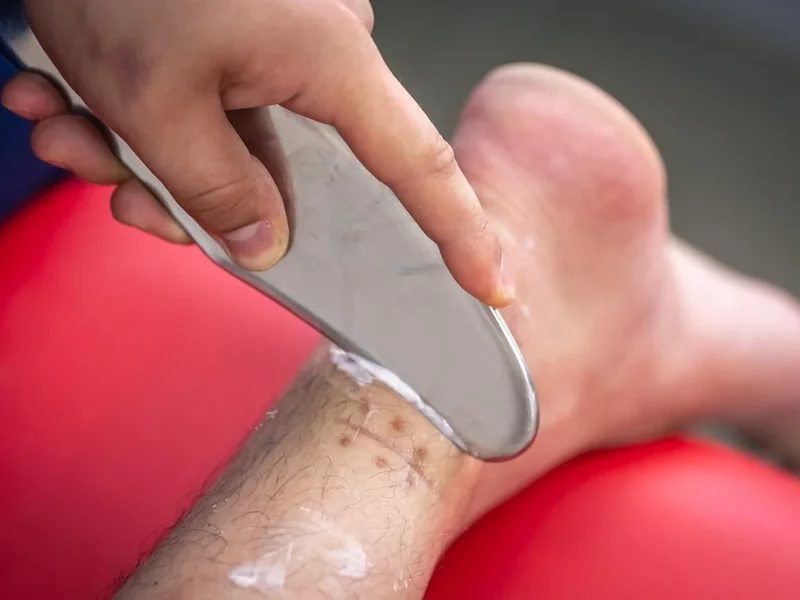
Stainless steel Graston instrument being drawn along a patient's calf
01What It Is

What is the Graston Technique?

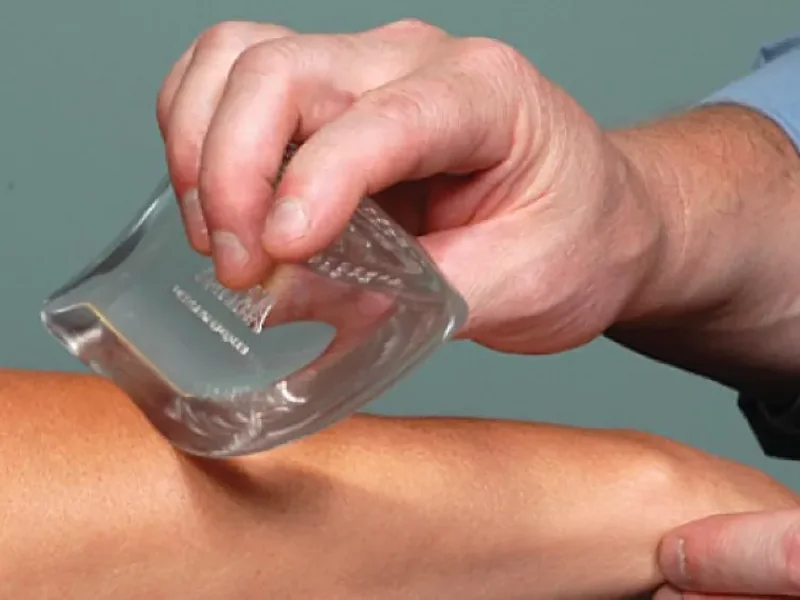
The Graston Technique is a form of instrument assisted soft tissue mobilization built around a set of stainless steel instruments, each shaped for a different contour of the body. The steel does two jobs. First it detects. As an instrument passes over the skin, restricted tissue sends a distinct grainy vibration up through the metal and into the clinician's hands, which is far easier to feel than fingertips alone allow. A vague region of tightness becomes a mapped location you can both point to. Second it treats. Controlled strokes across and along that restriction introduce a targeted mechanical stimulus, help separate tissue layers that have adhered to one another, draw fresh blood into an area that has gone quiet, and restore the glide that fascia, tendon and muscle depend on. The work is precise rather than aggressive. Depth, angle and stroke direction are chosen for the tissue in front of the clinician and changed the moment the feedback through the instrument changes. At Fittees that judgement belongs to Dr. Tochi Egbuzie, PT, DPT, FAAOMPT, whose AAOMPT fellowship in orthopedic manual physical therapy is exactly why the detecting half of this technique is worth as much as the treating half. The full 45 to 60 minute session is hers and yours, one on one.

Graston is rarely used alone. It frees the restriction so the range you gain has somewhere to go, then loading in the same visit teaches your body to keep it. Most patients feel a change after the first session, and typical plans run two to three visits a week for four to six weeks. Fittees is in-network with Blue Cross Blue Shield, UnitedHealthcare, Cigna and Medicare, and for other insurance we provide a detailed superbill so you can file for out-of-network reimbursement. No referral is needed, because Texas is a direct access state.
02Who It's For

Who it's for.

Graston suits problems that feel mechanical: a catch, a rope of tissue, a line that will not release no matter how long you hold a stretch. These are the cases that come to us for it.

01

Tight bands that stretching never reaches

You can put a finger on it. A rope in the calf, a line down the outside of the thigh, a knot in the forearm, a band across the upper back. Stretching pulls the whole muscle and never isolates the restriction, so the band survives every session you give it. The instruments locate that line first, then treat it instead of the whole region.

02

Old surgical and injury scars

A knee scope, a shoulder repair, a caesarean, an ankle sprain that healed badly years ago. The scar itself is often painless while the tissue around it has quietly stopped gliding, and the joint above or below ends up paying for it. Graston works along and across those adhesions so layers that should slide independently start doing it again.

03

Athletes chasing a nagging restriction

Runners, lifters, golfers and pickleball players who are not injured enough to stop but never quite feel loose. A restriction like that shows up as a small loss of range that quietly changes your mechanics under load. Finding it and treating it now is a much shorter conversation than treating the injury it eventually causes.

03What To Expect

What to expect in a session.

A Graston session is short on ceremony and long on hands-on time. Here is the order it runs in.

01

Warm the tissue, screen the movement

Dr. Egbuzie watches the movement that provokes your symptoms, then warms the area with active movement or hands-on work, because warm tissue gives clearer feedback through the instruments. She records what your range looks like before treatment so you both have something honest to compare against afterwards.

02

Scan with the steel, then treat

The instrument passes over lubricated skin. Where tissue is healthy it glides. Where tissue is restricted you will both feel the grain, and she will often ask whether that spot is the one you have been pointing at. She then works that line with graded strokes, checking pressure with you, and stops when the feedback smooths out.

03

Reload the range you just gained

Restriction returns if tissue is never asked to use its new range. You finish with stretching and strengthening through the range that was blocked, plus a short home program. Consistency between visits matters more than intensity here, and Dr. Egbuzie will show you exactly what that looks like at home.

Marking, soreness and who should tell us first

Light redness, small speckling on the skin and a day or two of soreness in the treated area are common and fade on their own. Tell Dr. Egbuzie before treatment if you take blood thinners, bruise easily, are pregnant, or have an active skin condition, an unhealed wound, a rash or reduced sensation over the area. Instruments are never used over broken skin. Pressure is dialled down, or the technique is swapped for a gentler hands-on approach, whenever that is the safer call.

In Their Words
Steel does not heal tissue. It finds the restriction a hand can miss, and it makes the range available long enough for your body to learn to keep it.
Fittees Physical Therapy and Wellness
Explore More

Where to go next.

Request an Appointment

Ready when you are.

HoursMonday - Saturday
Walk-insCall ahead
Book your evaluation. Same-week appointments available.
Step 1 of 5
First things first. What's your name?
We'll need a name to book you in.
Best number to reach you?
A phone number lets us confirm same-day.
And your email?
We'll send your confirmation here.
What questions do you have about your pain or injury?
A few words is all we need.
Look right? Send it.
✓
Request received.

We'll call within business hours to lock in your time.

Schedule Appointment