What causes headaches?
Not every headache is the same headache, which is why the same tablet works for some people and does nothing for others. The ones physical therapy changes are the ones with a mechanical driver: joints in the upper neck that have stopped moving, muscles at the base of the skull holding on all day, a jaw that clenches through the night. When the driver is mechanical, the pain is reproducible on examination. We can provoke it, ease it, and then treat it.
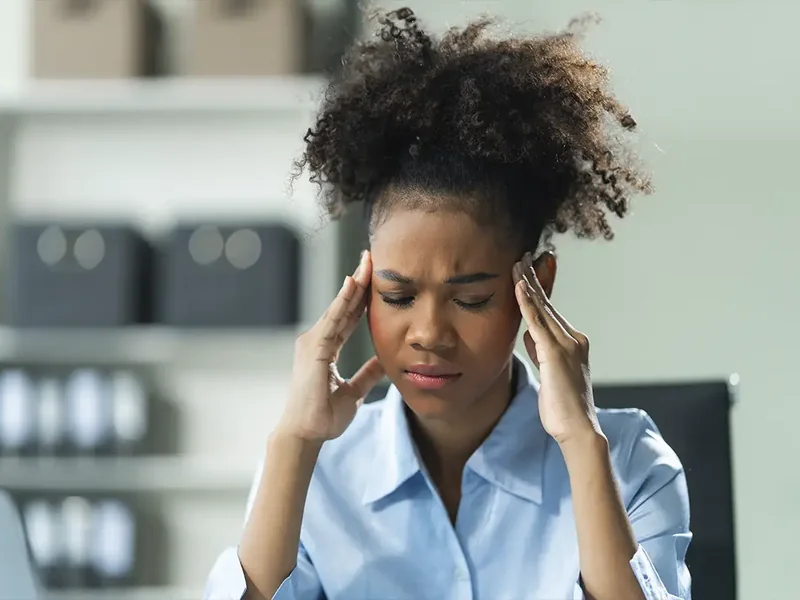
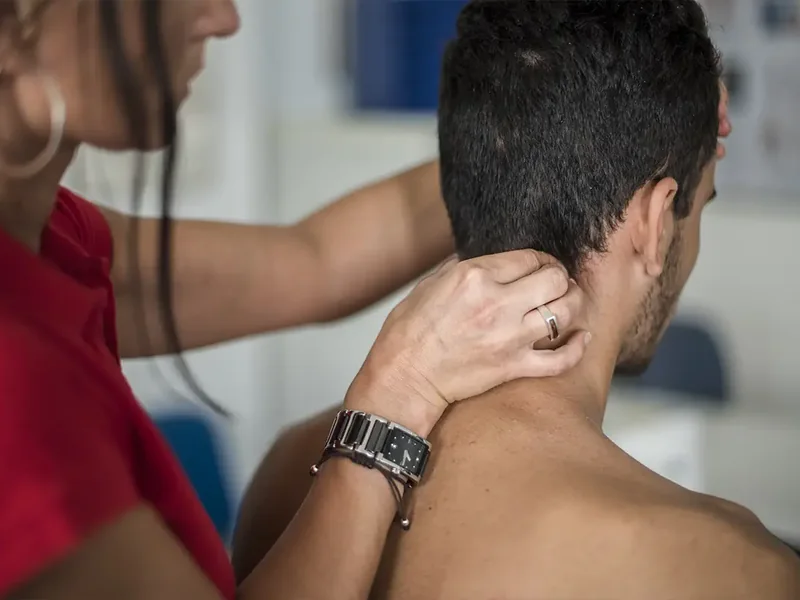
The uppermost segments of your neck share nerve supply with your face and scalp, which is why a stiff joint there gets felt as pain behind the eye or over the temple rather than in the neck itself. It tends to sit on one side, worsen after sustained postures, and it is reproducible when we load the joint by hand. Restoring motion in those segments often changes the headache within the session.
Muscles do not mind working. They mind working without a break. Hours at a keyboard, a phone wedged between ear and shoulder, or driving with your shoulders raised keep the upper trapezius and the muscles under the skull switched on continuously. They become tender, they refer pain into a band around the head, and they never get the rest that would settle them. Changing the position and building endurance is what breaks that cycle.
The muscles that close your jaw are powerful and they attach to the side of your skull, so clenching through the night or grinding through a stressful week produces temple pain that feels exactly like a headache. Jaw and neck share nerve pathways, and one reliably aggravates the other. If your jaw clicks, aches or tires while chewing, it belongs in the headache examination rather than in a separate appointment.
Migraine is a neurological condition, and physical therapy is not a fix for the condition itself. What we can change is the neck input that lowers your threshold for an attack. Many people with migraine also carry stiff upper cervical joints and sensitised neck muscles, and treating those reduces how easily an attack gets triggered and how rough the neck feels during it. If your presentation suggests something medical, you are told plainly and referred.
After a car accident or a head impact the neck muscles guard, and that guarding often outlives the injury by years. Position sense in the neck can be disturbed too, which is why some people get headaches alongside dizziness or visual strain. Dr. Egbuzie is certified in concussion management and vestibular rehabilitation, so the neck, the balance system and the visual system get examined together rather than one at a time.
Your head is heavy, and the small deep muscles that hold it over your shoulders fatigue quickly when they are undertrained. The big superficial muscles take over, tighten, and turn into a pain source themselves. This is why the headache tends to arrive in the afternoon rather than the morning. Endurance training for those deep muscles is unglamorous, takes weeks, and is one of the most reliable changes we make.