The joint is hot, puffy and angry, and every attempt to use it like normal sets the whole thing off again.

Cryotherapy is the clinical use of cold to change what is happening inside a painful, irritated area. Applied to a targeted region, cold narrows local blood vessels, slows the rate of chemical activity in the tissue and reduces how quickly nearby nerves fire. In plain terms, it turns the volume down: less fluid driven into the area, less throbbing, and a temporary dulling of the pain signal that makes a joint feel usable again. That window is the entire point. Cryotherapy is not a treatment on its own and it repairs nothing. It is a tool that buys a stretch of time in which you can move, load and retrain a body part that pain had locked down. At Fittees it is used deliberately and never by default: in the days after an acute injury to keep swelling in bounds, around a surgical recovery alongside the rest of your rehab, or at the end of a session that deliberately stirred up a joint we are pushing. Dr. Tochi Egbuzie, PT, DPT, FAAOMPT decides where cold belongs in your plan, applies it properly, and pairs it with the movement that actually drives recovery, inside a 45 to 60 minute session that is one on one from start to finish.
Timing and dosage are the whole skill. Cold applied too long, too cold or straight onto skin does harm instead of good, and cold used as a substitute for loading will keep an injury in a holding pattern for months. Most patients feel a change after the first session, and typical plans run two to three visits a week for four to six weeks. Fittees is in-network with Blue Cross Blue Shield, UnitedHealthcare, Cigna and Medicare, and for other insurance we provide a detailed superbill so you can file for out-of-network reimbursement. You do not need a referral, because Texas is a direct access state.
Cold earns its place when an area is too irritable to work with. These are the situations where we reach for it, and always alongside the rest of the plan rather than instead of it.
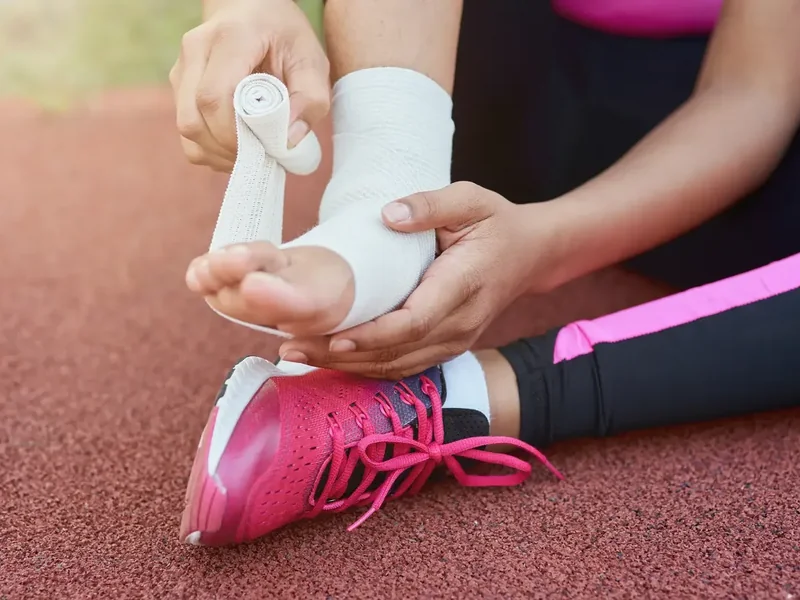
A rolled ankle, a jammed finger, a knee that swelled overnight. Early swelling is useful up to a point, and past that point it becomes the thing limiting your movement. Targeted cold in those first days helps keep it in bounds so the joint can start moving sooner, and moving sooner is what protects your range while the tissue heals.
Post-operative knees, shoulders and ankles are often stalled by swelling and pain more than by the repair itself. Cold used on a schedule around your exercises can be the difference between doing your range of motion work properly and quietly skipping it. We fit it around what your surgeon has asked for, never in place of it.
Arthritic knees, cranky shoulders and old injuries that light up after a long day or a hard session. Cold is not a fix for any of these, and we will tell you that plainly. What it can do is settle the flare enough that you keep progressing on the strength work instead of losing a week to it every time.
Cryotherapy is a small part of a full session, placed where it does the most good. Here is how it fits into your visit.
Dr. Egbuzie assesses swelling, warmth, range and how irritable the joint is, and checks your skin and your sensation over the area. Cold goes on only when there is a reason for it. She tells you what she is aiming for, whether that is controlling swelling, settling a flare or making the next movement possible.
Cold is applied to the targeted area with a barrier between the source and your skin, and the limb is supported and often elevated. The application is timed and your skin is checked during it. You should feel cold, then aching, then a dull numbness. Sharp burning is a signal to stop, so say so.
The moment the edge comes off, we use it. Gentle range of motion first, then the loading your plan calls for, done while the joint tolerates more than it did ten minutes earlier. You leave knowing exactly how to use cold at home, for how long, and at what point in your recovery to stop bothering with it.
Cold is never placed directly against bare skin. A barrier always goes between the source and you, every application is timed, and your skin is checked partway through. Tell Dr. Egbuzie first if you have Raynaud's, a known cold sensitivity or cold urticaria, poor circulation, diabetes, nerve damage or any loss of sensation in the area, an open wound, or a nerve that sits close to the surface where we would be treating. In those cases cold is adjusted or replaced with a different tool. Skin that turns white or blotchy, numbness that lingers well after treatment, or pain that sharpens instead of dulling means stop and tell us.
Cold heals nothing. It opens a window in which movement becomes possible, and movement is the part that does the healing.

Therapeutic ultrasound used to warm deep tissue and improve extensibility before hands-on work.

Therapeutic soft tissue work that lowers guarding and pain so the strengthening work can start.

Return to sport is a standard you meet, not a date on a calendar. We test it before you go back.