What causes arthritis?
Arthritis is not one condition. It is a family of them, and they wear on a joint in different ways. Some come from cartilage thinning over years. Some come from an immune system attacking the lining of the joint. Some trace back to an old fracture or sprain that never got properly rehabilitated. The label on your imaging report matters less than the answer to one question: which joints are being asked to carry load they cannot handle, and what can be built around them. That is what an evaluation is for.
The cartilage that cushions the ends of your bones thins over years, so the joint surfaces sit closer together and complain sooner. Wear on a scan is common, and it is not a verdict. Cartilage has no nerve supply of its own. What hurts is the irritated tissue around it, and that responds to loading the joint deliberately instead of guarding it. Strong quadriceps and glutes take real force off a worn knee, and that is trainable at any age.
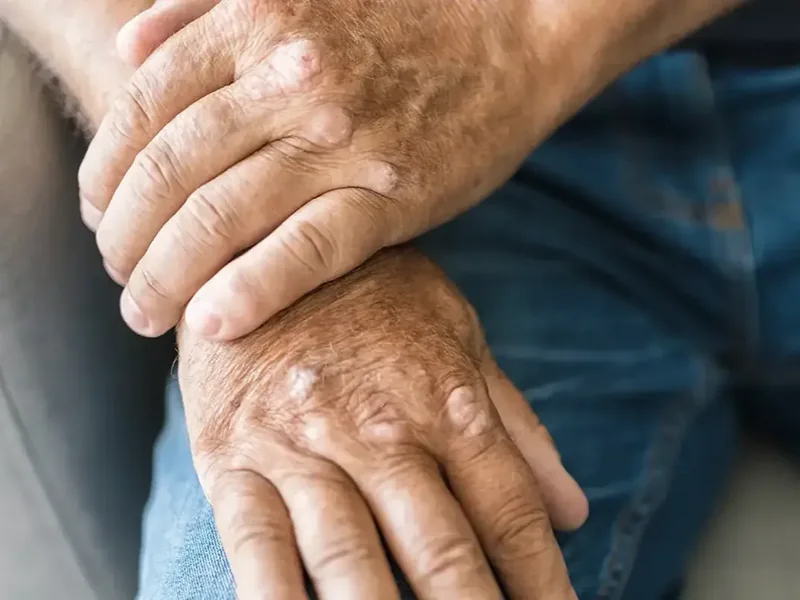
Rheumatoid arthritis and its relatives are driven by the immune system attacking the joint lining, not by mileage. That needs medical management from your physician, and it needs movement alongside it. Stiffness after inactivity is the hallmark, and gentle range of motion work early in the day is one of the most reliable ways to shorten it. We build strength in the windows when symptoms are quieter, and back off intelligently during a flare rather than stopping altogether.
A fracture, a bad ankle sprain, a torn ligament that was braced and then forgotten. The joint healed enough to stop hurting, but the strength and the control never came back, so it has been running slightly off center ever since. Years later that joint is the one that aches. Rehab that finishes the job is how arthritis gets prevented. If it is already here, we rebuild what was skipped the first time around.
Pain teaches you to stop using the joint, and the joint gets worse for being left alone. Muscle mass drops, the capsule tightens, the cartilage loses the compression cycle that keeps it nourished, and the pain spreads to whatever is compensating. This is the loop most people are stuck in when they arrive. Breaking it does not require heroics. It requires graded, progressive loading that stays just under the level that flares you.
Two knees, same age, same mileage, and only one of them hurts. Usually the difference is how force travels through the leg. A stiff ankle, a weak hip, or a foot that collapses inward sends load into one corner of the joint instead of spreading it. Changing that pattern changes what the joint absorbs with every step, which is why we assess the whole chain and not only the part that is sore.