Fittees Physical Therapy and Wellness

Shoulder Pain Treatment in Sachse

You have stopped reaching for the top shelf with that arm, and you already know which side of the bed you cannot sleep on.

01What Causes It

What causes shoulder pain?

The shoulder trades stability for reach. It is the most mobile joint you own, and it stays safe only because the rotator cuff, the shoulder blade and the mid back all fire in the right order. Break that order and the joint starts hunting for room it does not have. That is why the pain shows up reaching, lifting or rolling onto that side, and why it rarely settles on its own. Dr. Egbuzie finds the link that gave out first, then loads it back.
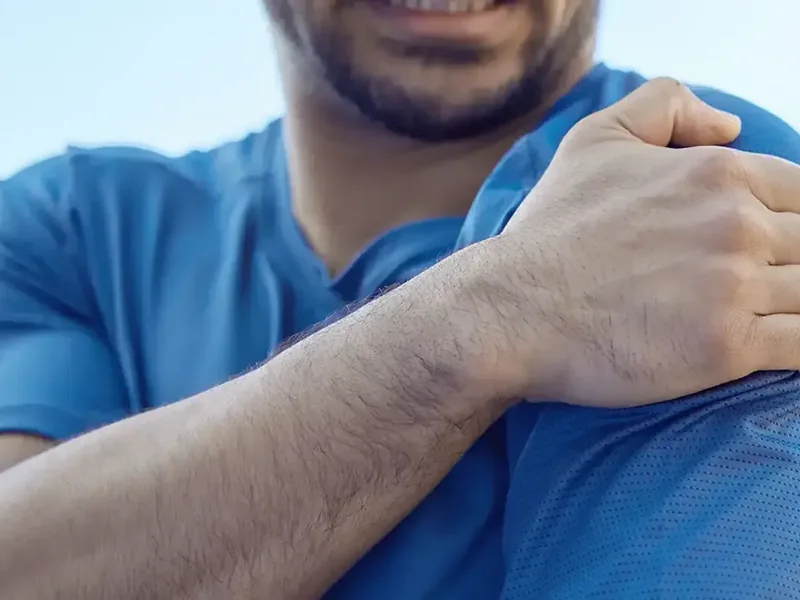
Doctor of Physical Therapy testing rotator cuff strength and shoulder range of motion

Four small muscles hold the ball of the shoulder centered in its socket while the big movers do the lifting. Overload them, or land hard on the arm, and the tendon frays or tears. The signature is pain reaching overhead and a night you spend on the other side. Most cuff injuries do not need a surgeon. They need the cuff loaded again, progressively, until it can hold the joint under real weight.

The capsule around the joint thickens and contracts, and the shoulder loses motion in a predictable pattern: outward rotation first, then reaching overhead, then getting a hand behind your back. It often follows a period when the arm was guarded or immobilized. Stretching harder does not shorten it. Graded joint mobilization matched to the stage you are in, plus movement you can tolerate at home, is what restores usable range.

When the shoulder blade stops rotating upward as the arm rises, the space above the cuff closes down and the tendon gets pinched at roughly the same point in every rep. People call it impingement. The tendon is the victim, not the culprit. Restoring shoulder blade motion, freeing the mid back and retraining the timing between the two usually changes the painful arc within the first few sessions.

The acromioclavicular joint is the small joint on top of the shoulder where the collarbone meets the blade. Sprain it in a fall, or grind it for years under bench presses and overhead work, and it gets sore at a very specific spot. Reaching across your body is the giveaway. Offloading that joint, changing how you press and pull, and building the cuff underneath it settles most cases without imaging.

Not every shoulder problem starts at the shoulder. Irritated joints and nerves in the neck refer pain into the shoulder and upper arm, and a stiff mid back robs the arm of the last stretch of overhead reach. If your shoulder tests strong and moves well but still hurts, the neck is the first place we look. Screening it takes minutes and it changes the plan completely.

Painting a ceiling, a new overhead press, a weekend of serving in tennis, a baby carried on one hip. The tissue was not weak, it was unprepared for how much you asked of it, how fast. This is the most fixable cause on the list and the most commonly missed one. We map what changed in the weeks before it started, then rebuild capacity in steps your shoulder can actually absorb.
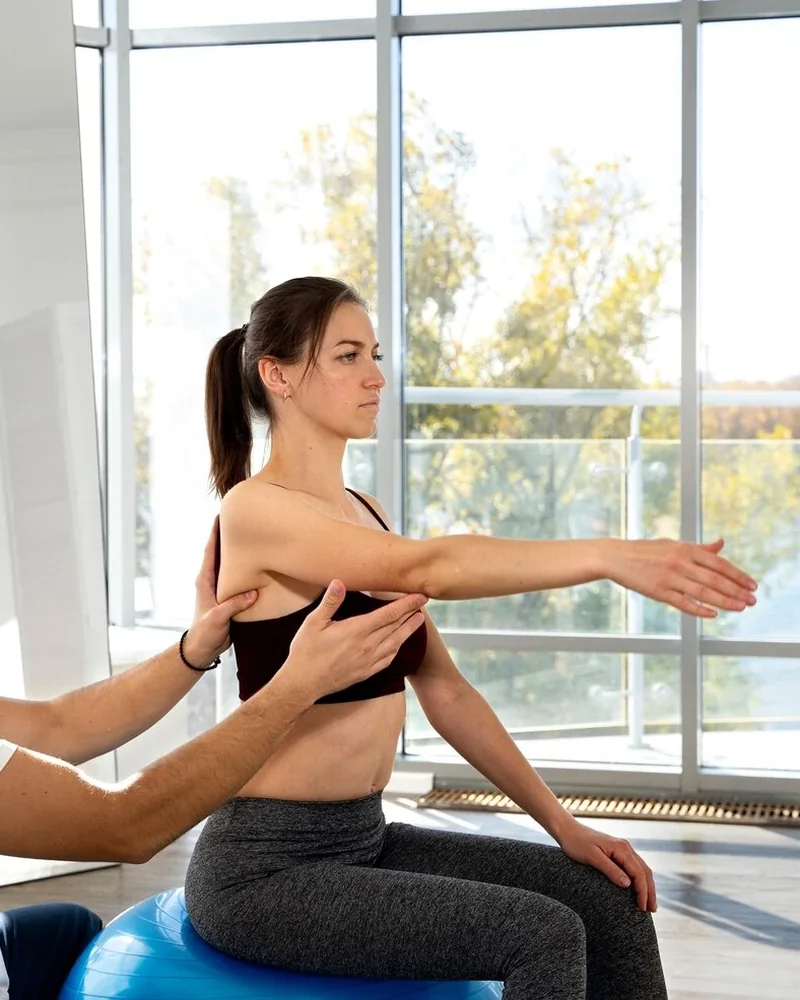
Hands-on shoulder joint mobilization followed by rotator cuff strengthening
02How PT Helps

How physical therapy in Sachse helps.

You do not need a doctor's note to start. Texas is a direct access state, so you can book an evaluation and be assessed this week. That evaluation runs 45 to 60 minutes with Dr. Egbuzie, one on one, not fifteen minutes with an aide. She tests your range, your cuff strength, your shoulder blade control and your neck, then tells you which one is driving the pain. Treatment starts the same visit: hands-on work to free the joint and the tissue around it, then loading that rebuilds the cuff without flaring you. Most patients feel a meaningful change inside the first two or three visits, and a typical plan runs two to three visits a week for four to six weeks. Fittees is in-network with Blue Cross Blue Shield, UnitedHealthcare, Cigna and Medicare, and for other insurance we provide a superbill so you can file for out-of-network reimbursement.

03What To Expect

What to expect from your recovery.

01

Find the driver

Your first visit is an evaluation, not a treatment room tour. Dr. Egbuzie measures range, tests each rotator cuff muscle, watches the shoulder blade as your arm rises and clears the neck. You leave knowing which structure is irritated, what made it that way, and what the plan is. Treatment starts the same day.

02

Calm it, then open it

Early sessions take pain out of the driver's seat. Hands-on joint mobilization, soft tissue work and dry needling where it is indicated give the shoulder room to move again. You get a short list of exercises, not a stapled packet, chosen because they restore range without provoking the tendon. Sleeping on that side usually returns in this stretch.

03

Load it back to strong

Range without strength is a shoulder that hurts again in a month. We progress the cuff and the shoulder blade under real resistance, then rehearse the thing you actually want back: the overhead press, the serve, the toddler, the top shelf. You finish with a written program and the rule for progressing it yourself.

In Their Words
A shoulder does not get better because it was rested. It gets better because the cuff and the shoulder blade were given work they could handle, then a little more.
Fittees Physical Therapy and Wellness
Related Conditions

Pain rarely travels alone.

Request an Appointment

Ready when you are.

HoursMonday - Saturday
Walk-insCall ahead
Book your evaluation. Same-week appointments available.
Step 1 of 5
First things first. What's your name?
We'll need a name to book you in.
Best number to reach you?
A phone number lets us confirm same-day.
And your email?
We'll send your confirmation here.
What questions do you have about your shoulder?
A few words is all we need.
Look right? Send it.
✓
Request received.

We'll call within business hours to lock in your time.

Schedule Appointment