Fittees Physical Therapy and Wellness

Sports Injury Rehab in Sachse

You are taping it, training around it or sitting out, and nobody has told you what has to be true before you can go back.

01What Causes It

What causes sports injuries?

Most sports injuries are not accidents. They are a mismatch between what a tissue could tolerate that day and what the play demanded of it. Sometimes the gap opens in one instant, on a cut or a landing. More often it opens over weeks, as training volume climbs faster than the tendon, bone or muscle can adapt. The two need different plans. Getting the category right on day one is what separates a clean return from the same injury by midseason.
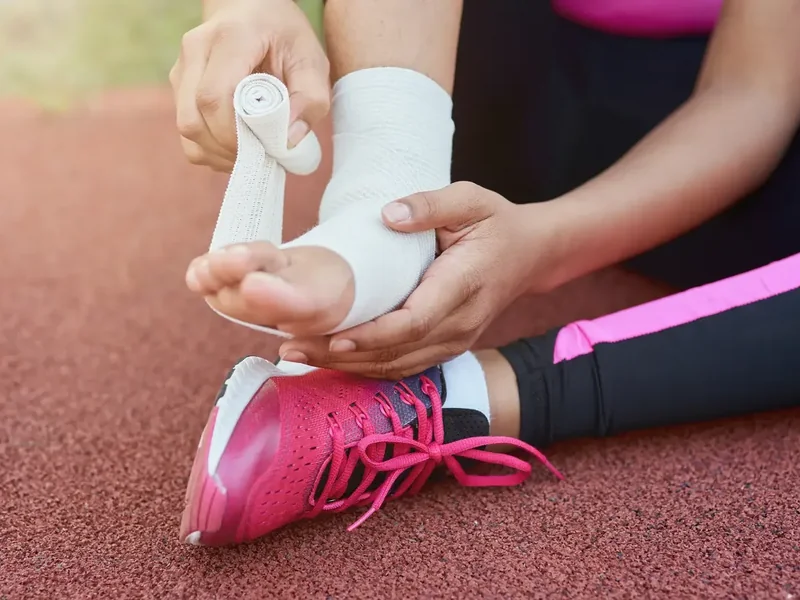
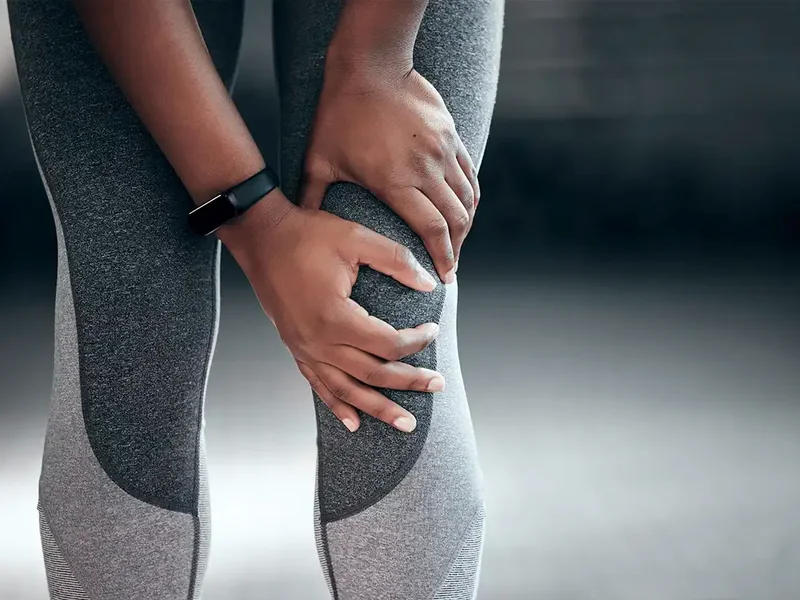
Doctor of Physical Therapy assessing an athlete's injured knee during a sports rehab evaluation

A sprain is a ligament stretched past what it could hold. A strain is the same story in a muscle or its tendon. Both usually happen at the end of a range, under speed: an ankle rolling on a landing, a hamstring at full stride. Protected early motion beats immobilizing them. Scar tissue lays down along the lines of stress you give it, so what you do early decides how strong it heals.

Tissue adapts to load, but only at its own rate. Add mileage, intensity and frequency in the same week and the adaptation curve falls behind the demand curve. That gap is where tendinopathy, shin pain and stress reactions live. The answer is almost never total rest, because rest lowers capacity further. The answer is dropping the aggravating load, keeping the rest of your training, and stepping the volume back up on a schedule.

A knee that collapses inward on a landing, a trunk that side bends every stride, a shoulder that finishes a throw without the hips. These are not style problems. They put the load somewhere the tissue was not built to take it, every single rep. We film the movement, find the leak, and drill the correction until it holds at game speed rather than only in the clinic.

Most re-injuries are first injuries that were rehabbed until they stopped hurting, then abandoned. Pain leaves long before strength, control and confidence come back. An ankle that was never retrained still cannot balance under fatigue. A quad that never got back to full strength still lets the knee down on a cut. We test for the leftovers, and we usually find some.

Some injuries genuinely are the other player. A tackle, a fall, a collision at the plate. Even then the rehab is not passive: the joint has to regain motion, the muscle around it has to come back, and the rest of the chain has to be checked, because you compensated for weeks while it hurt. Concussion management sits here too, and it has its own return-to-play progression.

A date on the calendar tells you nothing about whether the tissue is ready. Strength compared side to side, hop and change of direction testing, and the ability to repeat it when you are tired: those tell you. Returning before you clear them is the single most common reason an athlete gets hurt again in the same season. We give you the criteria in writing so the decision is not a guess.
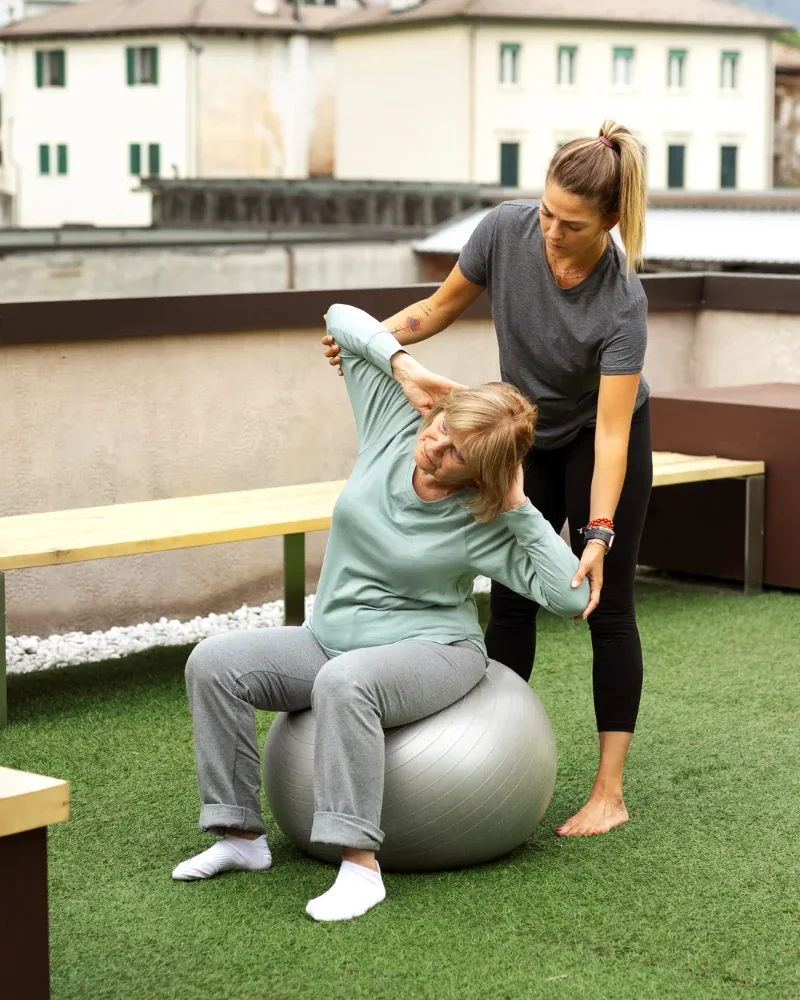
Athlete performing sport specific strength and agility work during sports injury rehab
02How PT Helps

How physical therapy in Sachse helps.

You do not need a referral to start. Texas is a direct access state, so an athlete can be evaluated the week the injury happens instead of waiting on an appointment to get an appointment. The evaluation runs 45 to 60 minutes with Dr. Egbuzie, one on one, and it covers more than the sore part: the joint above it, the joint below it, and the demands of your sport. From there you get a plan in stages. Calm the tissue, restore motion, rebuild strength, then load the exact patterns your sport asks for, at speed and under fatigue. Most patients feel a meaningful change inside the first two or three visits, and a typical plan runs two to three visits a week for four to six weeks. Fittees is in-network with Blue Cross Blue Shield, UnitedHealthcare, Cigna and Medicare, and for other plans we provide a superbill for your insurer.

03What To Expect

What to expect from your recovery.

01

Diagnose the mechanism

We start with what happened and what you need to get back to. Dr. Egbuzie examines the injured tissue, tests the joints above and below, and screens the movement that produced the injury. You leave the first visit with a working diagnosis, the return-to-sport criteria you will have to clear, and treatment already underway.

02

Restore motion, rebuild strength

Manual therapy, dry needling and soft tissue work bring pain and swelling down so the area will move. Then loading starts, early and deliberately, because tissue that is protected too long comes back weaker. We keep training the parts of you that are not injured the whole time, so you lose as little fitness as possible.

03

Test it, then release you

The last phase looks like your sport. Cutting, landing, sprinting, throwing, repeated until it holds when you are tired. We measure the injured side against the healthy one and against the demands of your position. When you clear the criteria you go back, and you go back with the strength work that keeps you there.

In Their Words
Return to sport is a standard, not a date. We test it here, in the clinic, before your season tests it for you.
Fittees Physical Therapy and Wellness
Related Conditions

Pain rarely travels alone.

Request an Appointment

Ready when you are.

HoursMonday - Saturday
Walk-insCall ahead
Book your evaluation. Same-week appointments available.
Step 1 of 5
First things first. What's your name?
We'll need a name to book you in.
Best number to reach you?
A phone number lets us confirm same-day.
And your email?
We'll send your confirmation here.
What questions do you have about your sports injury?
A few words is all we need.
Look right? Send it.
✓
Request received.

We'll call within business hours to lock in your time.

Schedule Appointment