Fittees Physical Therapy and Wellness

TMJ & TMD Treatment in Sachse

You wake with a tight jaw, chewing anything solid has become a calculation, and the click on one side has started bringing a headache along with it.

01What Causes It

What causes TMJ and TMD?

The temporomandibular joint opens and closes more often than any other joint you own, and it does it with a small disc riding between the jaw and the skull. When that disc, the muscles that drive it, or the neck underneath it stop working together, you get pain, clicking, locking and headaches, usually on one side. Dentists see the teeth, and a night guard protects them. It does not retrain the joint or the muscles. That part is physical therapy, and the jaw responds to it well.
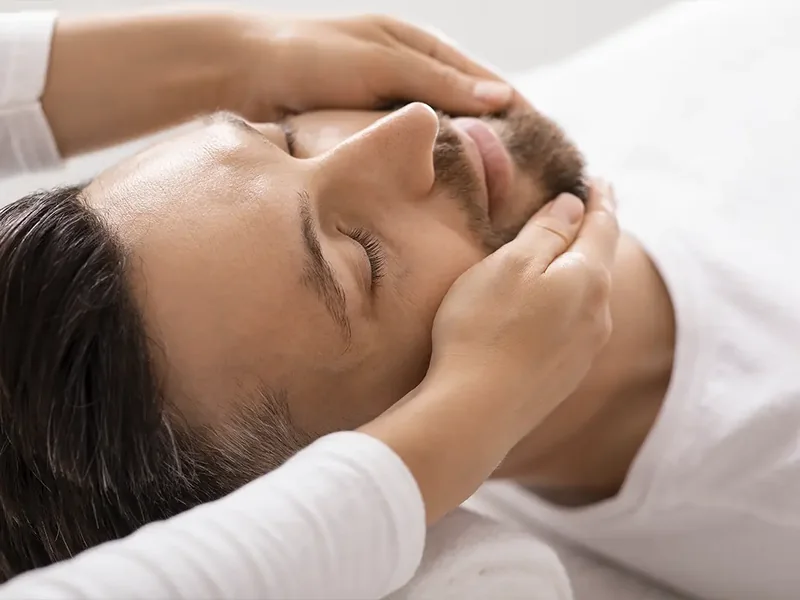
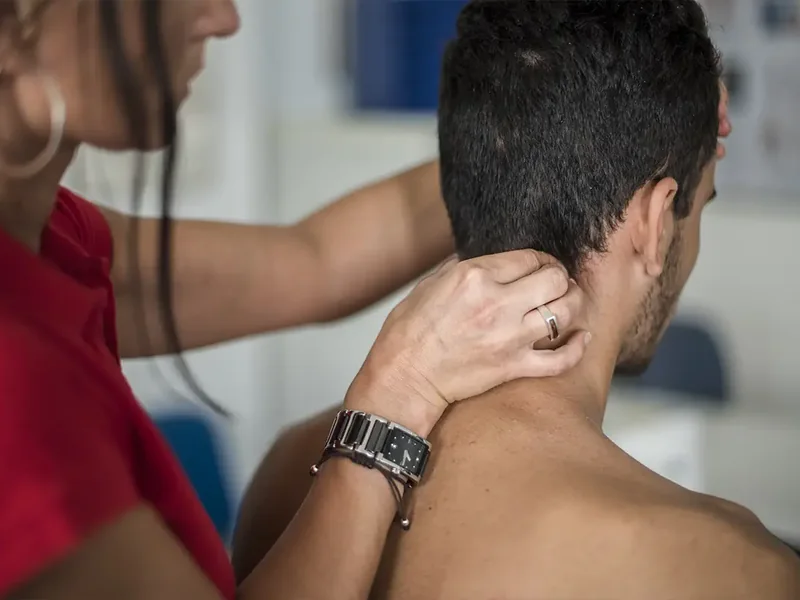
Doctor of Physical Therapy assessing jaw movement and TMJ mechanics in Sachse

Sustained clenching keeps the masseter and temporalis under load for hours, and muscle that never gets to rest becomes tender, tight and painful to chew with. You wake with a tired jaw and an ache in the temple. A guard stops your teeth wearing down, which matters, but it does nothing for the muscle. Dry needling and hands-on release take the tone out, then we work on what is driving the clenching.

That click is usually the disc slipping in and out of position as the jaw opens. On its own, a painless click is not an emergency. When it comes with pain, or when the jaw catches and will not open all the way, the mechanics need correcting. Treatment restores the way the jaw translates and rotates as it opens, and retrains the muscles that control the path so the disc is not fighting them.

The upper neck and the jaw share nerve supply, and they share posture. A head that sits forward changes the resting position of the jaw and the load on the joint. This is why jaw treatment that ignores the neck keeps failing, and why people with TMD so often have neck pain and headaches too. Your evaluation examines both, because treating one without the other leaves the problem half addressed.

Holding the mouth wide open for an extended appointment stretches the joint and the muscles further than they normally go, and some jaws do not settle afterward. Orthodontic changes shift how the teeth meet, which changes where the jaw rests. Neither is a reason to panic. Both respond to hands-on treatment of the joint and graded retraining of the muscles that open and close it.

Jaws carry stress. People hold the teeth lightly together all day without noticing, chew gum constantly, or bite a lip when concentrating. None of it feels like effort, and all of it keeps the joint loaded. Part of the plan is awareness work: where the tongue rests, where the teeth should sit, and what the jaw does when you are busy. It is unglamorous, and it changes symptoms quickly.
Doctor of Physical Therapy treating a patient's jaw and neck with manual therapy
02How PT Helps

How physical therapy in Sachse helps.

Jaw pain is a musculoskeletal problem, and it gets treated the way other joints are treated: assess the joint, assess what feeds it, treat both. You do not need a referral from a dentist or a physician to be seen, because Texas is a direct access state. Your session is 45 to 60 minutes with Dr. Egbuzie, a Doctor of Physical Therapy with fellowship training in orthopedic manual therapy, and it is hands-on throughout. Manual therapy for the joint and the muscles that close it, dry needling into the masseter and temporalis when they are the driver, treatment of the upper neck, then retraining of how the jaw opens so the correction survives the drive home. Fittees is in-network with Blue Cross Blue Shield, UnitedHealthcare, Cigna and Medicare, and for other insurance we provide a superbill so you can file for out-of-network reimbursement. Most patients feel a meaningful change inside the first two or three visits, and typical plans run 2 to 3 visits a week for 4 to 6 weeks.

03What To Expect

What to expect from your recovery.

01

Evaluation of the jaw and the neck

We measure how far the jaw opens, where it deviates on the way, and which muscles are tender. Then we examine the upper neck, because it is so often part of the picture. You get a clear explanation of what is happening inside the joint, an honest timeline, and hands-on treatment at that first visit.

02

Taking the load off the joint

Manual therapy inside and outside the mouth releases the muscles that have been clenching, and dry needling settles the masseter and temporalis when they are the main driver. Treatment of the upper neck goes alongside it. Eating, yawning and talking get easier as the tone comes down and the joint stops being squeezed all day.

03

Retraining how the jaw moves and rests

Relief holds when the jaw opens on a straight path and rests in the right place. We train controlled opening, tongue and teeth position, and the neck posture underneath it, then add the habits that keep the joint quiet through a working day. You leave with a short program and the reasoning behind every part of it.

In Their Words
A jaw does not work alone. It works with the neck, the muscles that close it and the habits you keep all day, which is where treatment has to go.
Fittees Physical Therapy and Wellness
Related Conditions

Pain rarely travels alone.

Request an Appointment

Ready when you are.

HoursMonday - Saturday
Walk-insCall ahead
Book your evaluation. Same-week appointments available.
Step 1 of 5
First things first. What's your name?
We'll need a name to book you in.
Best number to reach you?
A phone number lets us confirm same-day.
And your email?
We'll send your confirmation here.
What questions do you have about your jaw pain?
A few words is all we need.
Look right? Send it.
✓
Request received.

We'll call within business hours to lock in your time.

Schedule Appointment