What causes carpal tunnel syndrome?
The carpal tunnel is a narrow passage on the palm side of your wrist. The flexor tendons to your fingers and the median nerve share it, and the roof is a stiff band of ligament that will not stretch to make room. Anything that raises the pressure inside that tunnel, whether swelling, thickened tendon sheaths or a wrist held in one position for hours, squeezes the softest structure in there. That structure is the nerve. It explains why the symptoms are numbness and tingling in the thumb and first fingers rather than plain wrist pain, and why they wake you at night.

Work that keeps the wrist bent or the fingers gripping for hours raises tunnel pressure and then keeps it raised. Assembly work, tools that vibrate, hairdressing, hours of typing with the wrists cocked upward, scanning at a checkout. The tendon sheaths thicken in response to the constant demand, and the tunnel has no spare room to give. Changing the position and the recovery pattern is often the single largest lever, and it costs nothing once you know what to change.
Pregnancy, thyroid conditions, diabetes and inflammatory disease all change how much fluid sits in the tissues, and a tunnel with no slack feels every bit of it. Night symptoms are the giveaway, because fluid redistributes when you lie down and most people sleep with the wrist curled. Some of this belongs with your physician. Splinting the wrist in neutral overnight and specific nerve gliding work handles a surprising amount of the rest.
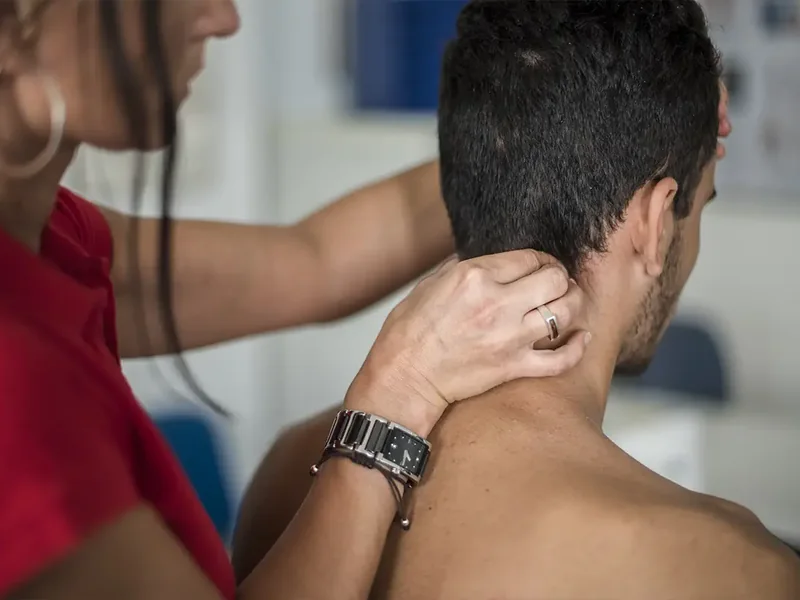
The median nerve does not begin at the wrist. It starts as roots in the neck and travels under the collarbone, through the shoulder and down the arm. Compression anywhere along that route makes the nerve more sensitive to compression further down, which is why some people get released surgically and stay numb afterward. A proper examination tests the whole path, not just the wrist, before deciding what to treat.
A broken wrist that healed with a slight change in shape, a bad sprain, or degenerative change at the base of the thumb can all narrow the space the nerve has to work with. The injury itself may be long forgotten by you. The nerve keeps reporting on it. Restoring wrist and forearm mobility and rebuilding the strength around a previously injured joint takes that pressure back off.
Healthy nerves slide within their sleeve as you move. Around a chronically compressed tunnel, scar tissue and swelling stick the nerve down, so every reach and grip pulls on it instead of letting it travel. That is what turns an occasional tingle into a constant one. Nerve gliding exercises restore that movement, and there is a real dose to them: too much aggravates an irritated nerve badly, which is why they are prescribed rather than guessed at.