Fittees Physical Therapy and Wellness

Sacroiliac Dysfunction Treatment in Sachse

The pain sits in one spot just below the belt line, it bites when you roll over in bed or stand up out of the car, and you can point straight at it with one finger.

01What Causes It

What causes sacroiliac dysfunction?

The sacroiliac joint sits where the base of your spine meets the pelvis, and it is built to move very little while transferring everything your legs do up into your trunk. When it stops sharing that load evenly, the surrounding tissue gets irritated and the pain parks itself on one side, low and deep. It is often mistaken for a disc, for the hip, or for sciatica, because it can refer into the buttock and the back of the thigh. The examination separates them.
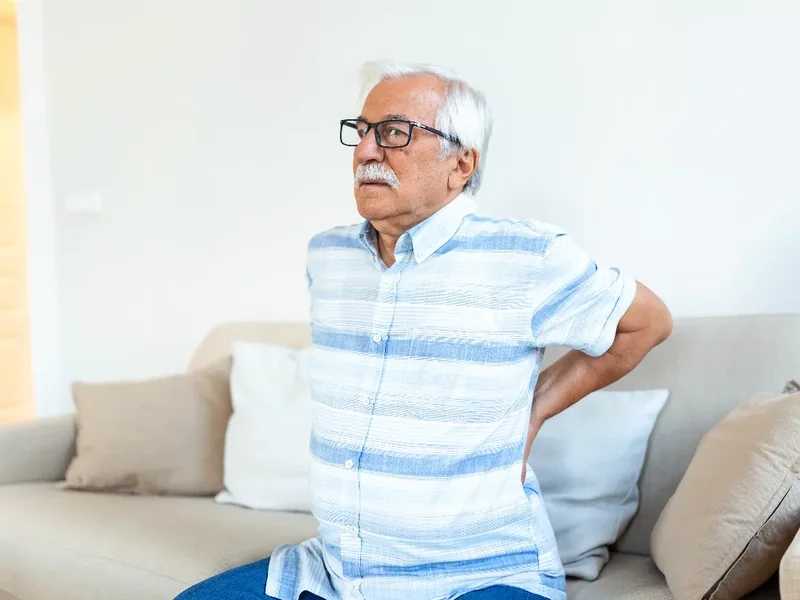
Doctor of Physical Therapy assessing sacroiliac joint movement in Sachse

Hormonal changes loosen the pelvic ligaments to make room for the baby, and the sacroiliac joints lose some of their passive stability. The muscles have to take over, and if they are not ready, one side starts to hurt. This is common, it is treatable, and it does not resolve on its own just because the pregnancy ended. Pelvic health is a stated specialty here, and the work is specific rather than general core exercise.

When a hip is stiff, the pelvis borrows movement from the joint above it. Every time you reach the end of the hip's range, the sacroiliac joint gives up a little more motion to cover for it. That is why treating only the painful side often fails. We test the hips first, restore what they have lost with hands-on work, and the SI joint stops being asked to do the hip's job.

Coming down hard on one leg, missing a step, or landing on the tailbone can shove the joint into a position it does not settle back from. The pain arrives quickly and stays on one side. Manual therapy and specific manipulation restore the position and the movement, then strengthening keeps it there, because a joint that got shifted once will shift again if nothing around it changed.

Habits load the pelvis unevenly. Standing with your weight parked on one leg, sitting on a wallet, driving with the seat twisted, sleeping curled with the top knee dropped forward. Any of these, repeated daily, asks one sacroiliac joint to carry more than its share. Part of your plan is finding the loaded habit and changing it, because treatment that ends at the clinic door has to compete with the rest of your day.

The sacroiliac joint is held by muscle as much as by ligament. When the glutes and the deep abdominal wall are weak or poorly timed, the joint takes the force directly. Generic core work rarely fixes this, because the problem is usually timing and endurance rather than raw strength. We test which muscle is late, train it specifically, then load it in the positions that hurt you now.
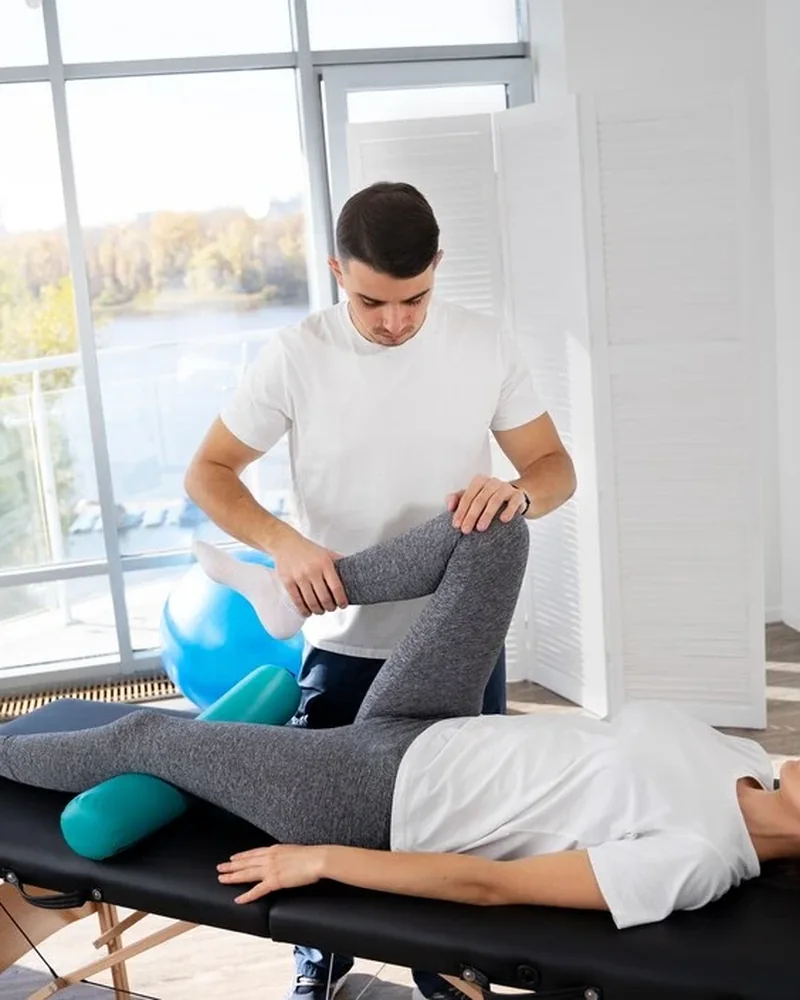

Doctor of Physical Therapy performing hands-on treatment for sacroiliac joint pain
02How PT Helps

How physical therapy in Sachse helps.

SI joint pain responds well once it is actually identified. That takes a cluster of hands-on tests rather than a scan, which is why the evaluation matters more here than almost anywhere else. You do not need a doctor's note to book one. Texas is a direct access state, so you can start this week. Your session is 45 to 60 minutes with Dr. Egbuzie, a Doctor of Physical Therapy with fellowship training in orthopedic manual therapy, and it includes the treatment as well as the assessment: manipulation or mobilization to restore the joint, dry needling for the guarding muscles around it, then the strength work that holds the correction. Fittees is in-network with Blue Cross Blue Shield, UnitedHealthcare, Cigna and Medicare, and for other plans we provide a superbill for reimbursement. Most patients feel a meaningful change inside the first two or three visits, and typical plans run 2 to 3 visits a week for 4 to 6 weeks.

03What To Expect

What to expect from your recovery.

01

Confirming it is the SI joint

Low back and buttock pain has several possible sources, and they get treated differently. Your first visit runs the provocation tests that identify the sacroiliac joint, clears the disc and the hip, and checks how the pelvis behaves when you load one leg. You get the finding explained in plain language, plus treatment the same day.

02

Settling the joint and restoring the motion

Hands-on treatment and specific manipulation restore how the joint and the hip above it move. Dry needling releases the guarding in the glutes and low back that has built up around the painful side. As the sharp catch when you roll over or stand out of the car settles down, we start loading.

03

Making the pelvis hold its own position

Relief that comes from manual therapy alone tends to leak away. Strength is what keeps it. We progress glute and deep core work into single leg positions, then into the loads your life actually asks for: stairs, lifting a child, a long drive, a run. You leave knowing exactly what to do if it ever flares again.

In Their Words
A joint built to barely move will complain when it is asked to move too much, or not at all. Our job is to find out which one is happening and change the load.
Fittees Physical Therapy and Wellness
Related Conditions

Pain rarely travels alone.

Request an Appointment

Ready when you are.

HoursMonday - Saturday
Walk-insCall ahead
Book your evaluation. Same-week appointments available.
Step 1 of 5
First things first. What's your name?
We'll need a name to book you in.
Best number to reach you?
A phone number lets us confirm same-day.
And your email?
We'll send your confirmation here.
What questions do you have about your SI joint?
A few words is all we need.
Look right? Send it.
✓
Request received.

We'll call within business hours to lock in your time.

Schedule Appointment